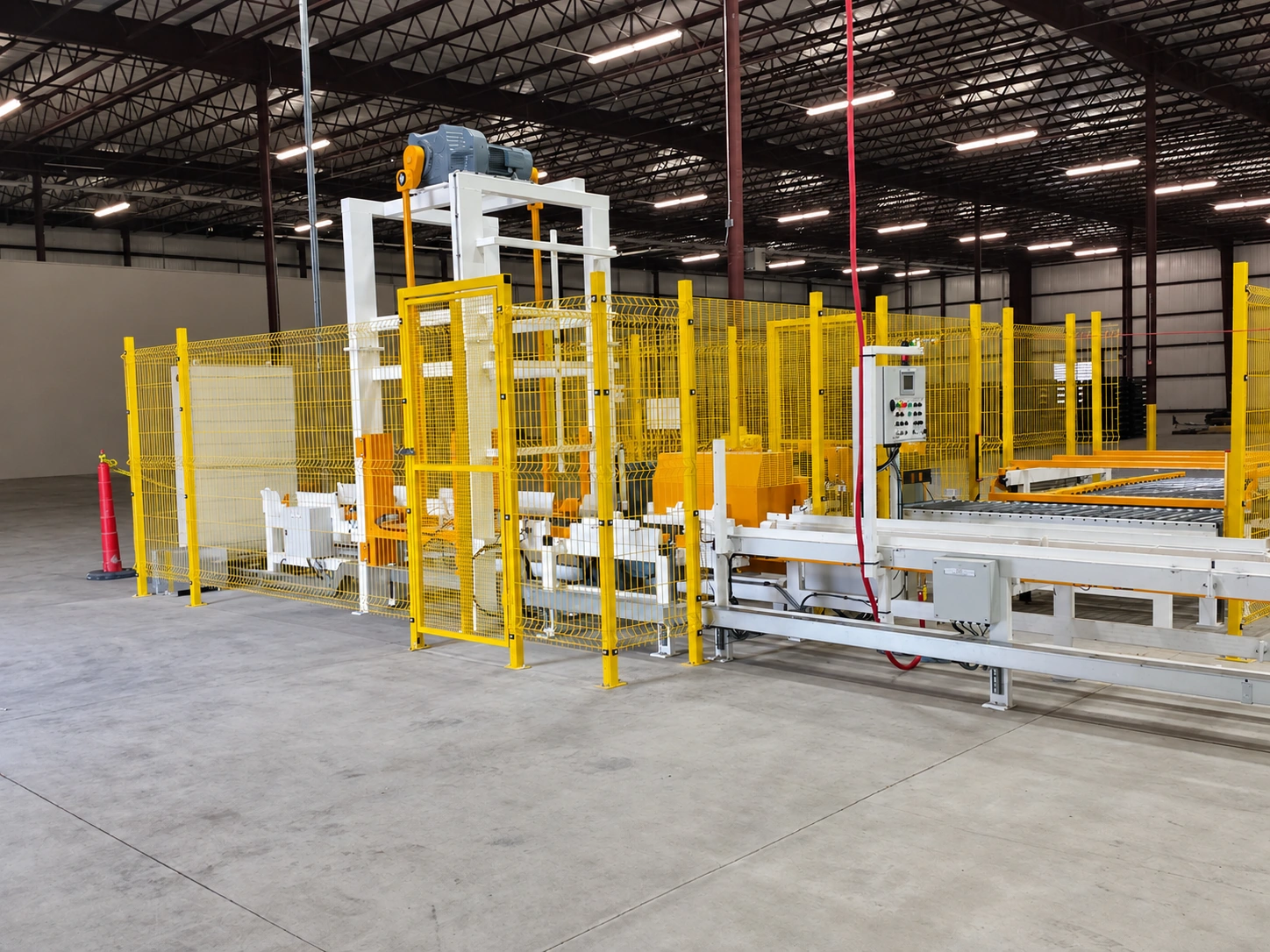
CW200
Automated handling and filling.
The CW200 combines automated destacking, demoulding, carrier tip-out, oiling, concrete dosing, vibration and stacking in one wetcast production system. Filled moulds are stacked ready for forklift transfer to the curing area.
*Output depends on the products, machine configuration and operating conditions. Confirm achievable output for your requirements with our team.
From mould handling to automatic stacking.
The CW200 automates the core stages of wetcast production.
- Destack
- Demould
- Carrier tip-out
- Oil
- Dose
- Vibrate
- Ball placement (optional)
- Stack
From initial curing to finished-product stacking.
After an initial curing period of approximately 24 hours in the moulds, the carrier stacks are returned to the machine by forklift. The products are demoulded and edge-stacked onto pallets for the subsequent 28-day final curing period.
Optional ball placement.
The optional ball placer provides spacing balls that create and maintain a gap between products when they are demoulded and edge-stacked on pallets, keeping them separated during final curing.
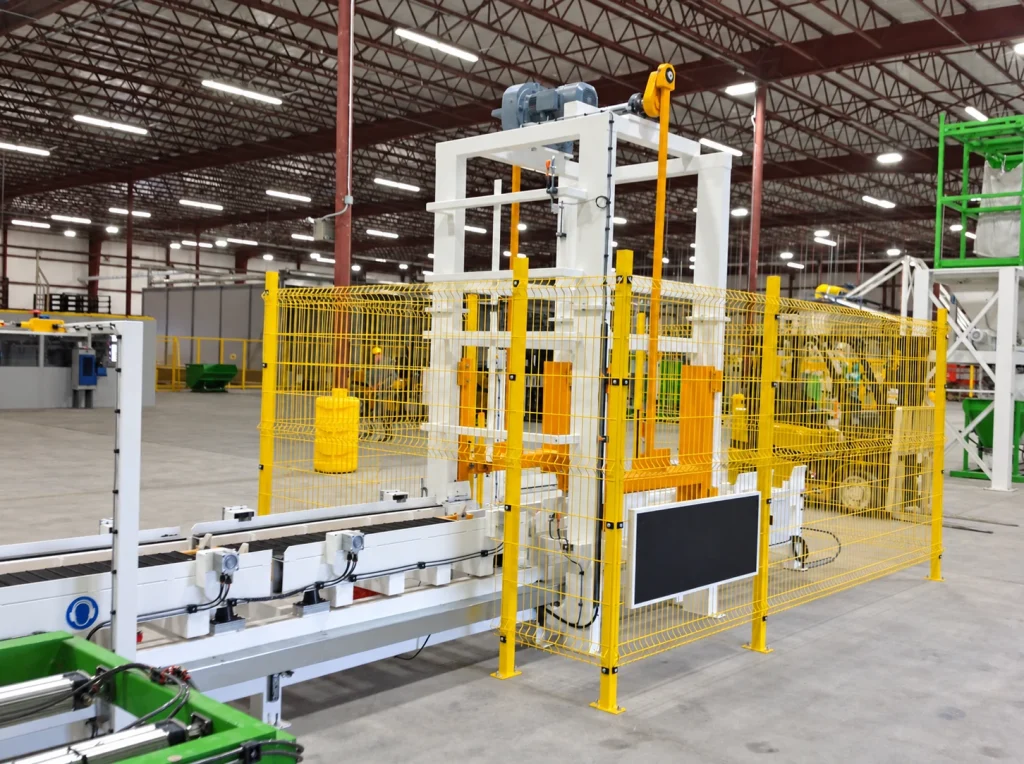
Bring handling into the production system.
The CW200 destacks carriers, demoulds the products and tips the carriers to clear debris before oiling, dosing and vibration. Filled moulds are stacked automatically, and an operator transfers the filled carrier stacks to the curing area by forklift.
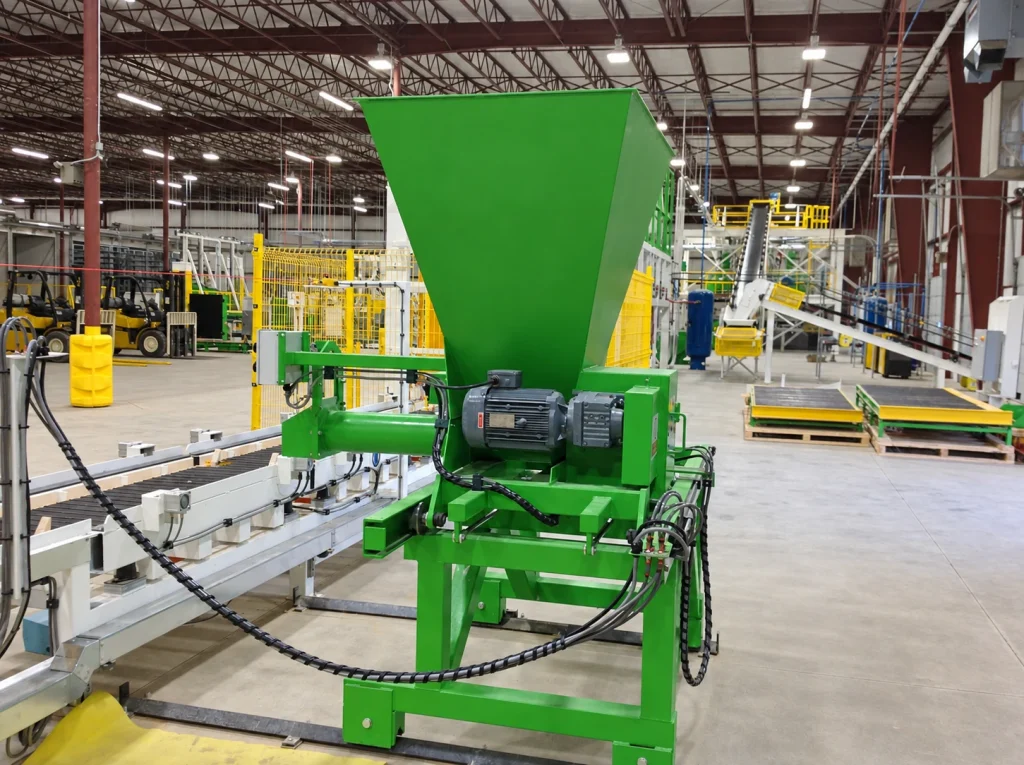
Concrete dosing within the line.
Concrete dosing is integrated with the other automated stages. Discuss the configuration around the products, moulds and production requirements of your operation.
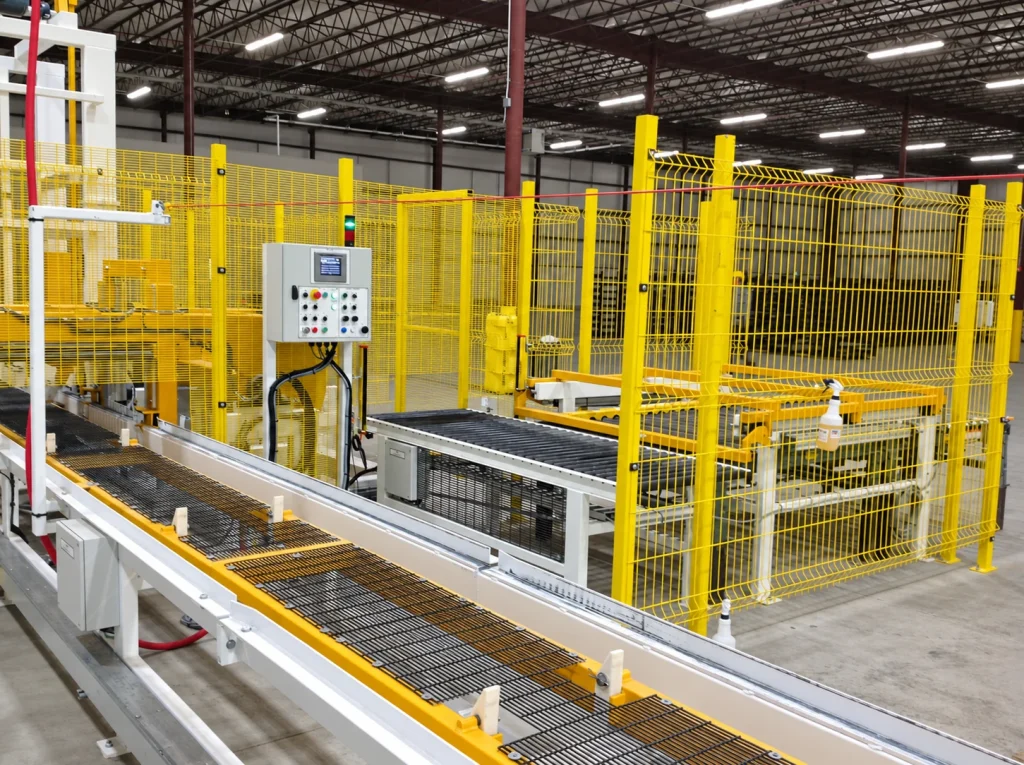
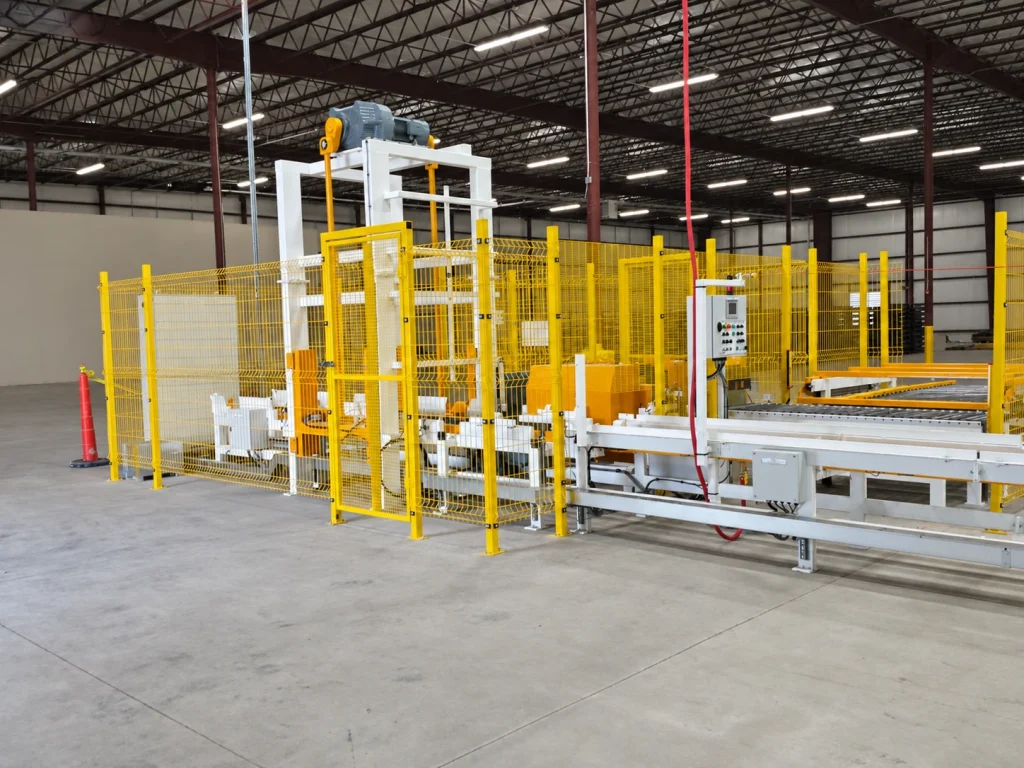
Watch the CW200 in operation.
In the video, ‘Pallet turnover’ refers to the carrier tip-out stage. The ball placer shown is optional equipment.
Start with what you need.
Build on it as you grow.
A CW100 can become part of a CW200 system as your production requirements grow.
Discuss your starting configuration and future expansion with our team.
Plan your next step →Planned around what you want to produce.
Your products
Product shape, size and finish.
Your moulds and carriers
Matched to your machine and production setup.
Your factory
Available space, layout and handling requirements.
Could the CW200 fit your production plans?
Send us your product details, factory layout and plans for growth.