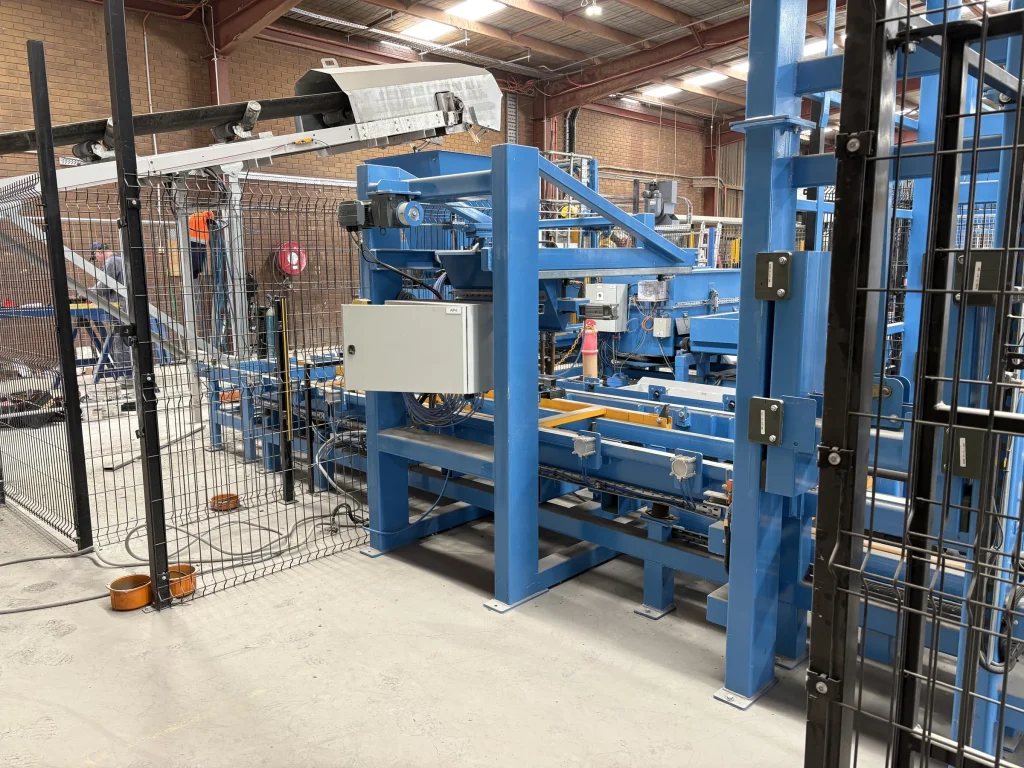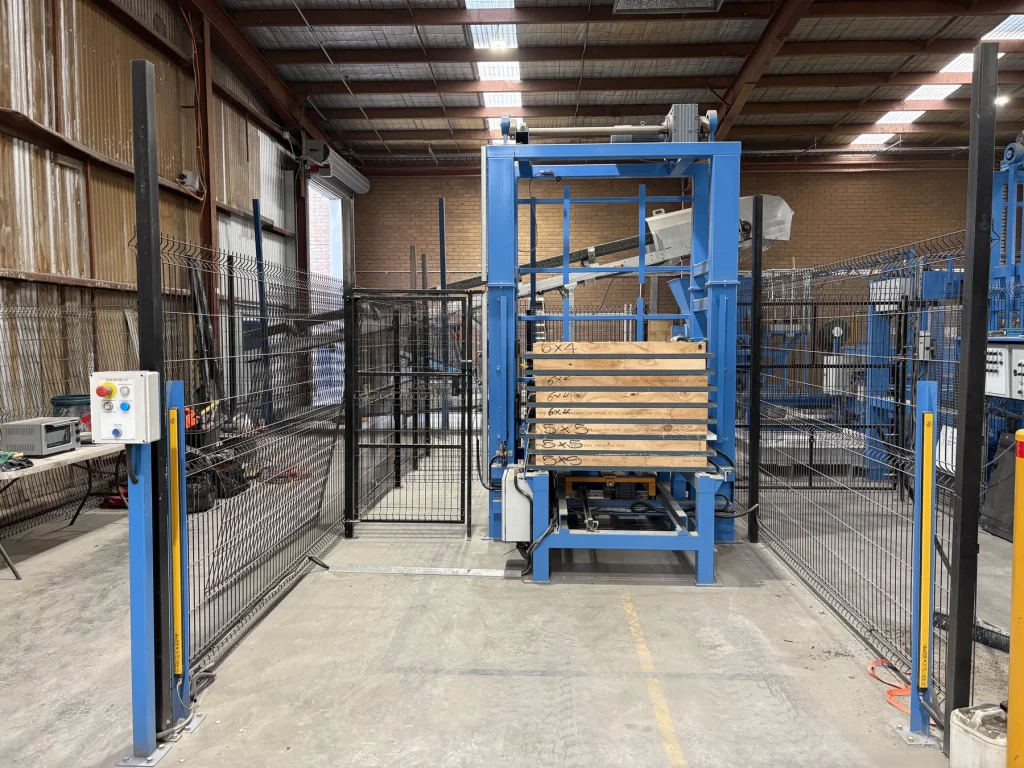
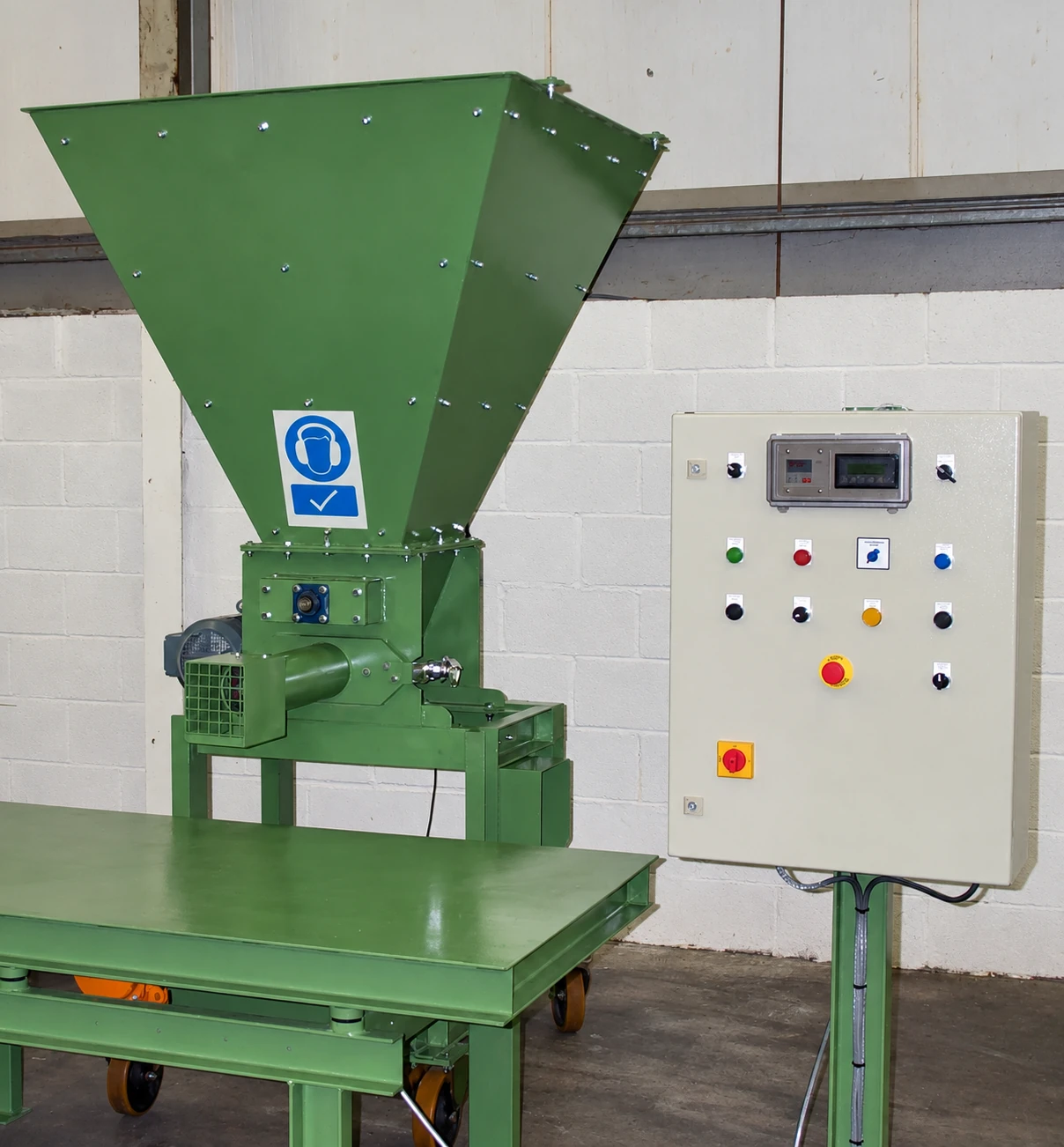
If you are starting wetcast production, the CW100 is usually the first step. It is not one fixed package: it is introductory equipment, configured around the products and moulds you want to make.
A common starting point
Many manufacturers begin with two pieces of equipment: a concrete doser and a single vibrating table. A mould oiler can be added to this setup, or supplied separately as a standalone stage.
How the basic setup works
In the basic doser-and-table setup, moulds are placed and removed by hand. Before production starts, the operator sets the required concrete weight on the doser’s screen, and the doser weighs that batch. Each cycle then follows four steps:
- Place the mould on the vibrating table.
- Discharge the weighed batch into the mould using a foot pedal. Once the discharge door closes, the doser automatically weighs the next batch.
- Activate vibration using a foot pedal.
- Lift off the filled mould.
Adding mould oiling
Where a mould oiler is included, the operator places the mould on a conveyor. It moves into position beneath the oiler, stops for automatic oiling, then moves out.
Handling depends on the configuration
Handling arrangements vary from one CW100 setup to another. The simplest doser-and-table arrangement relies on placing and removing moulds by hand, while other configurations include connected carrier handling. The right arrangement depends on your products, your mould sizes and the space you have available.
Output and mould size
There is no fixed throughput for a CW100, because output depends on the configuration, the products and the operator. There is also no universal maximum mould size: the equipment is sized around the products and moulds you plan to use.
Useful as you grow
CW100 equipment can remain useful as production grows. Manufacturers commonly keep it for specials and short runs alongside a larger CW200 or CW400 line.
What to have ready
A first conversation is easier with a few details to hand:
- The products you want to make, with their shapes, sizes and finishes.
- The moulds you plan to use, or the sizes you have in mind.
- Which tasks you would like to automate, and which you are happy to do by hand.
- The space, layout and handling arrangements available in your building.
Plan your starting setup
Tell us what you make and how you work today, and we can suggest a sensible starting configuration.